

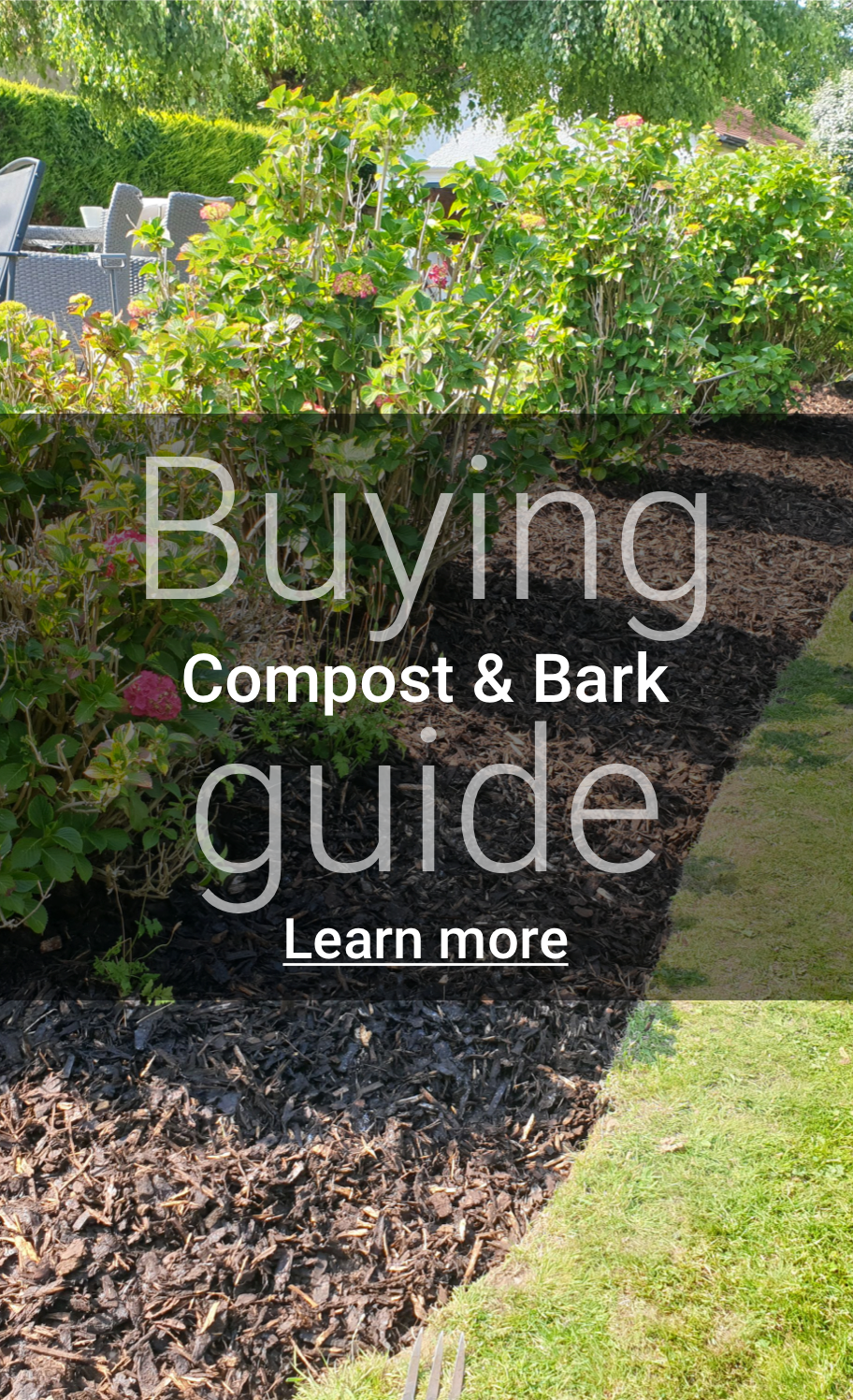


Enhance the fertility of your garden with our premium selection of top soil and compost. Choose from nutrient-rich blends and peat free compost that promotes healthy plant growth, improves soil structure, and aids in water retention. Create the perfect foundation for your gardening endeavours with our soil products.
Our range of compost and topsoil has everything you need to give your garden the care it deserves. Whether you’re seeding, preparing your flowers or nourishing your lawn, we have compost and topsoil to suit any job. Multi-purpose compost is packed with rich nutrients that your shrubs need for growth, making it ideal for seeding, potting, and hanging baskets.
Or nourish your garden with fertile topsoil for renewed growth and improved drainage, ideal for lawn, bedding, and border preparation. Our selection of Rolawn topsoil will suit a multitude of garden projects. Shop our garden hand tools and accessories for heavy-duty garden gloves, forks, shovels, and trowels to get the job done right.
Put your new compost to good use with our guide on how to build a planter box.
Compost is made from decomposed organic waste like food scraps and garden waste, and it’s designed to give plants, grass and flowers nutrients, help soil hold moisture and encourages microbes and worms.
Peat free compost is made without peat, and instead, usually recycled waste or bark, making it more environmentally conscious.
Peat-free compost is considered better for the environment as it’s designed to protect peat bogs which store carbon and support wildlife. Most plants also grow well in most peat-free composts.
Ericaceous compost is a type of compost that’s been specially formulated for plants that'd thrive in an acid-based environment, such as azaleas, blueberries and camellias.
Yes, it’s possible to mix the two together, but it’s important to keep in mind that this will reduce the acidity of the compost which may impact plants that thrive in an acid-based environment.
It’s a type of compost that contains loam, which is a fertile mix of silt, sand and clay. This type of compost retains nutrients, offers stability and balances moisture levels well, ideal for potting, sowing, and container plants.
No, compost is used to enrich soil, boosting its nutrients and structure. On the other hand, soil is a natural material that’s designed for habituating plants.
Not necessarily “go off”, but it’ll begin to lose nutrients, dry out, compact or stay wet, reducing its effectiveness for planting. We recommend you use bagged compost within a year of purchase, while storing it in a cool, dry place.
Topsoil is a natural and nutrient-rich soil type that’s made up of a combination of minerals like sand, silt and clay, microorganisms and organic matter, which creates the perfect environment for plants to grow.
Topsoil is ideal for levelling lawns, filling holes in lawns, repairing soil that’s either been damaged or too compacted, and when adding a new garden bed to your garden, raised or floor level.
As a general rule, garden beds need between 10-15cm of topsoil, while lawns tend to need 5-10cm.
Yes, it’s recommended you mix a thin layer of topsoil (5-10mm) with your grass seed to enhance the seed-to-soil contact, retain moisture and protect the seeds from birds, therefore improving germination. However, you shouldn’t bury the seed too deep as the seeds need light to grow.
No, topsoil only needs lightly firming through a light roll or gentle tread as opposed to compacting before you lay down turf. If you over compact it, you’ll risk restricting root growth and drainage.
Generally, lawns only require a depth of 10-15cm for topsoil. If planting flowers or vegetables, 15-30cm is recommended for nutrient and space for the roots to grow.